Spinal cord stimulation
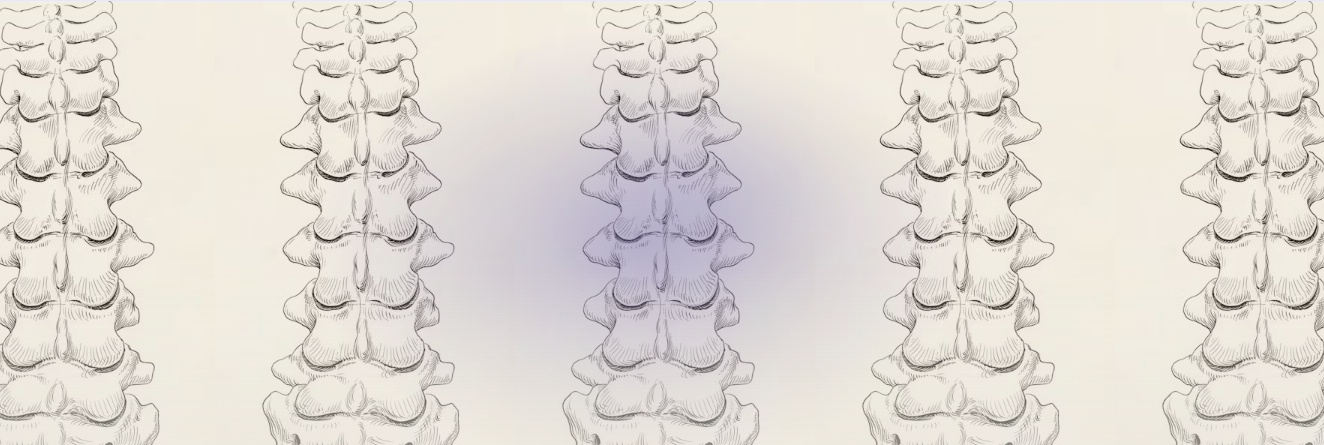
The spinal cord is a small but powerful organ which influences how we move, feel, and process pain. With transcutaneous spinal direct current stimulation (tsDCS), we can now try to non-invasively nudge its excitability, in order to find out whether this mild electrical adjustment has an effect on the way the spinal cord processes pain reflexes in humans.
The spinal cord's role in reflexes
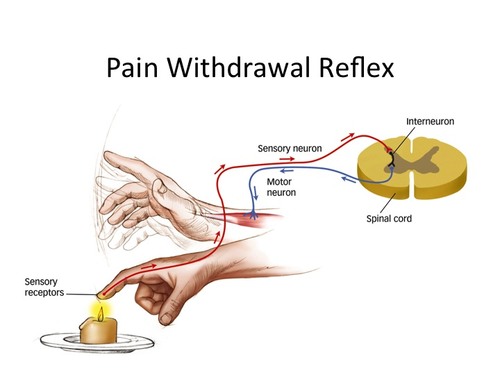
The withdrawal reflex is one of the spinal cord's most impressive built in defense mechanisms. Long before the brain has time to interpret danger, the spinal cord detects a harmful stimulus and triggers a rapid, protective response. When pain receptors in the skin sense something hot or sharp, their signal travels straight into the dorsal horn, where spinal circuits immediately engage motor neurons that contract the muscles and pull the limb away, often in under half a second.
How to measure this
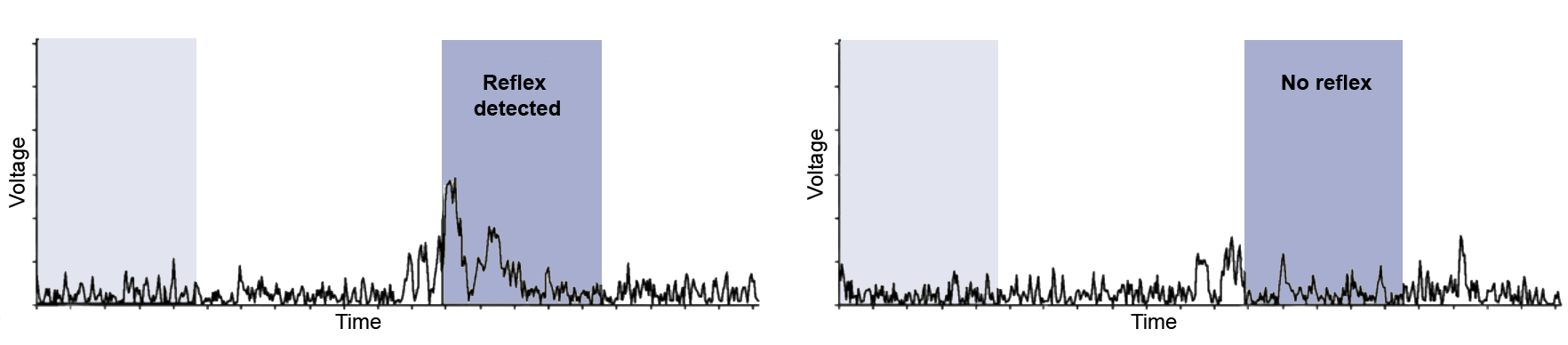
In research, this reflex can be measured in a controlled setup: a brief painful electrical pulse to the limb elicits a characteristic flinch, and electrodes placed on the muscles capture the timing and strength of this spinally mediated response.
What if we could gently modulate this reflex right at the spinal cord itself?
By applying a mild electrical current over the spinal segment where the reflex is generated, could we change how strongly the reflex responds or the threshold at which it is triggered?
The method
That idea is fundamental to transcutaneous spinal direct current stimulation (tsDCS).
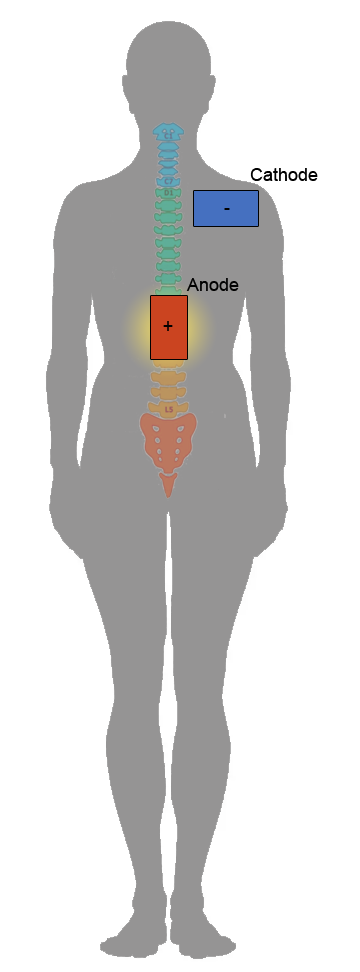
tsDCS involves consistent application of a direct current over the spinal cord through a pair of electrodes, one placed over the targeted spinal cord segment and the other (reference) over an area distal to the spine (e.g., arm, shoulder, hip, abdomen).
In comparison to other techniques like TMS the current is not strong enough to activate neurons but rather modulates spontaneous neuronal activity.
This project tests whether such non-invasive stimulation over lumbar parts of the spine can influence the withdrawal reflex in the leg and reveal how spinal processing changes under such modulation.
The challenge
Real-time reflex tracking
Reflex thresholds differ strongly between individuals, so we need live measurement to adjust stimulation intensity.
Safety and side effect control
Any tsDCS modulation must be tested against sham (a control condition that mimics the real stimulation but has no active effect) and remain free of unwanted sensations or confounds.
Strict blinding
To avoid placebo or experimenter bias, both participants and researchers must be fully blinded to the stimulation condition.
Solution: closed-loop reflex analysis
To accomodate the need for real-time reflex tracking, I developed a closed-loop analysis framework.
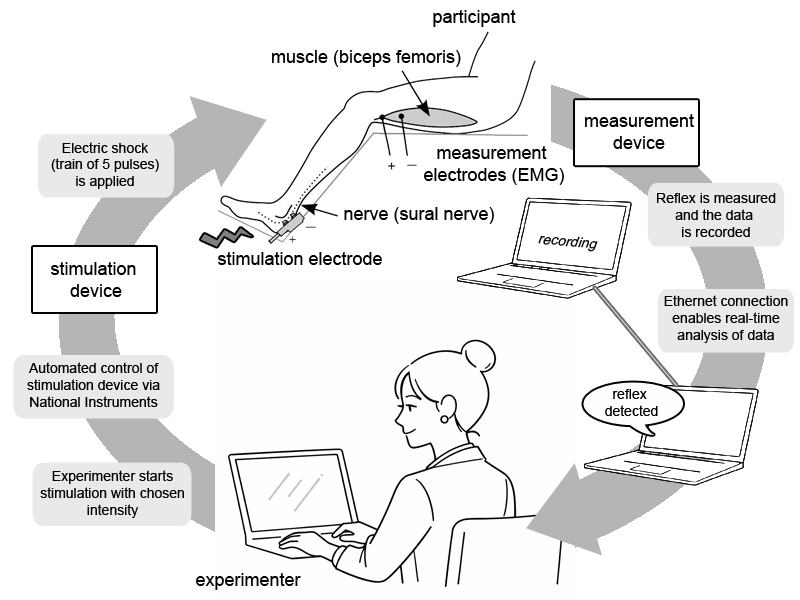
The experimenter starts a trial by selecting a certain intensity for the electrical shock.
This stimulus is automatically applied and its reflex measured. An ethernet connection from the recording computer to another computer enables the real-time data exchange and analysis.
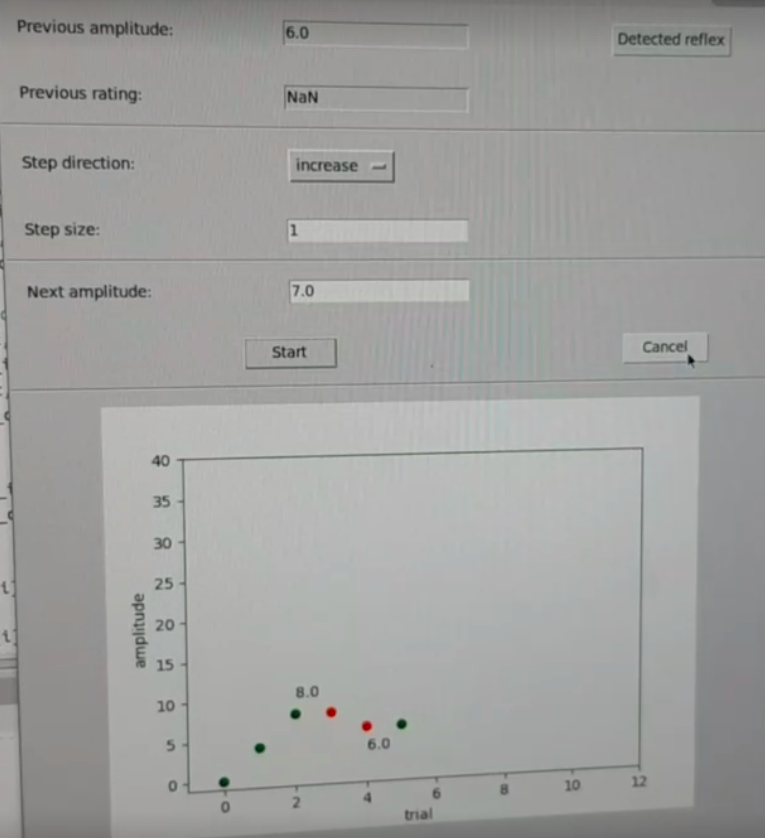
Based on the result, whether a reflex has been evoked or not, the experimenter can adjust the intensity for the next trial. My automated GUI also makes suggestions for the next step and thereby implements a staircase procedure.
What I contributed
- Programmed the full experimental protocol (stimulus control, real-time reflex tracking, custom GUI).
- Created detailed hardware and wiring schematics so that others could reproduce and operate the setup.
- Supervised student assistants who measured a complete second study and ensured consistent data quality.
- Analyzed heart rate, breathing rate, skin conductance, and pain ratings.
- Solved real-world data issues, including corrupted physiological traces.
- Visualized results in Python and documented the workflow on GitHub.
Research & Analysis Stack
First results
A central question in any neuromodulation study is whether the stimulation is safe and fully blindable. Our first results show that this is indeed the case — a major success for the project.
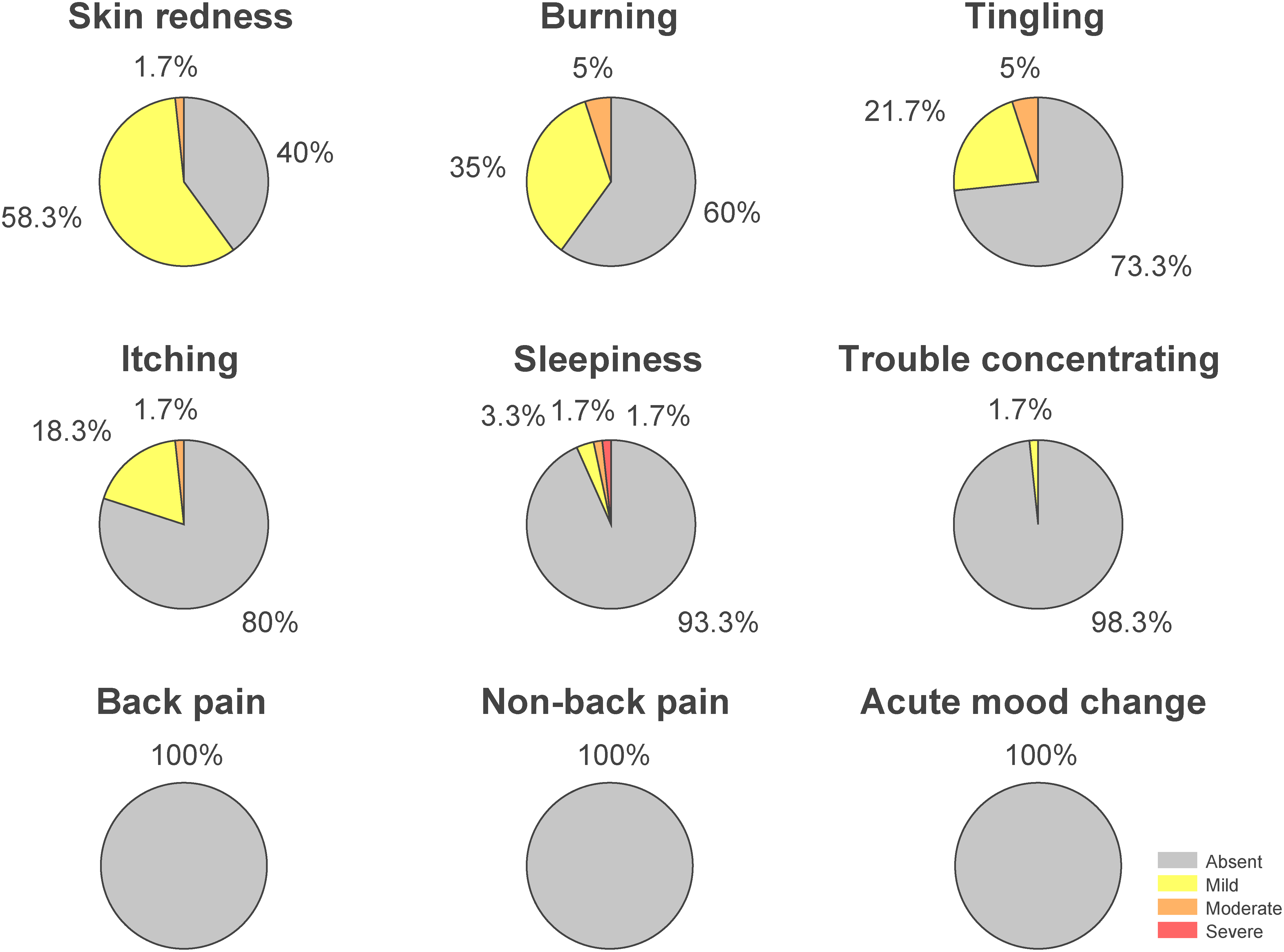
Participants reported mild sensations such as burning, tingling, or itching, but these effects were equally common in both active and control conditions. This is exactly what we want: when side effects do not differ, participants cannot use them to infer the stimulation condition. In line with this, their guesses about whether they received active stimulation remained at chance level, confirming effective participant blinding.
The only observable difference was a slightly stronger skin redness under the stimulation electrodes after active stimulation. To preserve full blinding, the experimenter performing reflex measurements must therefore not see the skin. We implemented a simple and robust solution: one researcher administered the stimulation, while another conducted all reflex measurements and participant interactions. This ensured complete experimenter blinding as well.
We also monitored unspecific physiological measures such as heart rate and breathing rate. Even subtle changes could introduce confounds, but no stimulation related differences were detected. This further strengthens the conclusion that tsDCS did not alter general physiological state.
Taken together, these findings demonstrate that tsDCS can be applied safely, comfortably, and under strict double blinding - exactly the conditions required for reliable mechanistic studies of spinal processing.
Next steps
With the protocol validated, we are now ready to test whether tsDCS can indeed modulate the withdrawal reflex. This will be the focus of a follow-up study.
We will also explore whether other tsDCS configurations, like a modulation of cervical instead of lumbar spine, can modulate pain perception in healthy participants.
To be continued...